
Introduction
Deceased organ donation rests on two main legal and physiological pathways to the declaration of death: death by neurological criteria, the basis of donation after brain death (DBD), and death by circulatory criteria, the basis of donation after circulatory death (DCD). The clinical, organizational, and ethical contours of these two pathways differ in ways that profoundly shape what organs can be recovered, what their post-transplant function is likely to be, and how donation programs need to be designed. Around them sit other variants — donation after euthanasia or medical assistance in dying (MAID) and country-specific hybrids of brain and circulatory criteria — that round out the global donation landscape.
This article reviews, from a clinical perspective, how DBD and DCD are defined and practiced today, how the modified Maastricht classification organizes the heterogeneity of DCD, and how worldwide activity is distributed across these modalities, with explicit attention to the very large between-country variation in the DCD share of deceased donation. The article is intended for transplant clinicians, intensivists, donor coordinators, and others who already work in the field; the goal is to provide a concise, current synthesis rather than a primer.
The Conceptual Frame: Two Pathways and the Dead Donor Rule
In all jurisdictions where deceased organ recovery is performed, the dead donor rule applies: vital organs may only be recovered from individuals who have already been declared dead, and recovery itself must not be the proximate cause of death [1]. The rule operationalizes a pre-existing ethical commitment — that physicians do not kill patients in order to obtain organs — into a procedural requirement, and it shapes everything downstream, from how brain death is examined to how long teams must wait after circulatory arrest in DCD.
Two physiological pathways can satisfy the rule. The first, established conceptually in the late 1960s, is the irreversible cessation of all functions of the entire brain, including the brainstem [2]. The second, much older, is the irreversible cessation of circulatory and respiratory function. The 1981 Uniform Determination of Death Act (UDDA) in the United States codified both routes in a single statute and provided the legal model that most U.S. states and many other jurisdictions adopted: an individual who has sustained either irreversible cessation of circulatory and respiratory functions or irreversible cessation of all functions of the entire brain, including the brainstem, is dead [3]. Most other countries with formal frameworks for deceased donation use comparable wording, although the clinical procedure for declaring each form of death and the legal recognition of each varies considerably.
Donation after Brain Death
3.1 Origins of the concept
The intellectual origin of brain death is usually traced to the 1968 report of the Ad Hoc Committee of the Harvard Medical School to Examine the Definition of Brain Death, which proposed "irreversible coma" as a new criterion for death [2]. Henry Beecher and his colleagues argued that improvements in mechanical ventilation and intensive care had produced a new clinical entity — a permanently unconscious patient with no spontaneous breathing or brainstem reflexes whose somatic functions could nevertheless be maintained for a time — and that this entity warranted formal recognition as death. Although organ procurement was not the only reason cited (the report also addressed the futility of continued treatment), the Committee was explicit that recognizing irreversible coma as death would also clarify the ethics of organ recovery.
Through the 1970s, the criteria were refined into a more recognizably modern form, and in 1981 the U.S. President's Commission and the UDDA aligned the legal and clinical understanding of death by neurological criteria, which is now more often called death by neurologic criteria (DNC) or brain death/DNC (BD/DNC) in international literature [3].
3.2 The World Brain Death Project and the 2023 consensus guideline
For many years, the practical determination of BD/DNC varied widely across institutions and countries. The 2020 World Brain Death Project (WBDP), led by Greer and a large multidisciplinary international panel, distilled more than 700 articles and a structured consensus process into a single set of recommendations covering the science of BD/DNC, minimum clinical criteria, pediatric and neonatal determination, BD/DNC on extracorporeal membrane oxygenation (ECMO) or after targeted temperature management, ancillary testing, somatic support after declaration, religion and law, and qualifications of examiners [4]. The WBDP framed BD/DNC as the permanent loss of the capacity for consciousness and the capacity for spontaneous breathing, demonstrated by a defined clinical examination and apnea test in a patient with a known, irreversible brain injury and no confounders.
In 2023, the American Academy of Neurology (AAN), the American Academy of Pediatrics (AAP), the Child Neurology Society (CNS), and the Society of Critical Care Medicine (SCCM) published a unified pediatric and adult BD/DNC determination guideline [5]. This document replaced the previous adult (2010) and pediatric (2011) guidelines and produced a set of evidence-informed, consensus-based recommendations grouped under general principles, examiner qualifications, prerequisites, the neurologic examination, the apnea test, ancillary testing, and special considerations. The guideline harmonized most of the WBDP positions for U.S. practice and is now the standard reference in many North American institutions; many countries continue to follow national guidelines that are broadly congruent with WBDP minimum criteria but differ in details (for example, in the number of physicians required, mandatory observation intervals, pediatric age cutoffs, and whether ancillary testing is mandatory or only used when the clinical examination cannot be completed).
3.3 Clinical determination
A modern BD/DNC determination requires several components. The prerequisites include identification of a known catastrophic brain injury sufficient to explain the loss of all brain function, exclusion of confounders (severe metabolic disturbance, drug effect, neuromuscular blockade, profound hypothermia), normalization of physiology (core temperature, mean arterial pressure, oxygenation), and a sufficient observation interval after the inciting event to demonstrate irreversibility. The clinical examination demonstrates coma, absent brainstem reflexes (pupillary, corneal, oculocephalic, vestibulo-ocular, gag, cough), and absent motor response within the cranial nerve distribution. The apnea test demonstrates the loss of respiratory drive in the face of a documented hypercapnic stimulus; it remains a mandatory component of BD/DNC determination because it is the principal test of brainstem respiratory function [6]. Ancillary testing is reserved for situations in which the clinical examination or apnea test cannot be completed safely or interpreted unambiguously. The 2023 AAN/AAP/CNS/SCCM guideline endorses radionuclide cerebral perfusion scintigraphy, transcranial Doppler (in adults), and four-vessel cerebral angiography among acceptable ancillary tests, while electroencephalography, evoked potentials, computed tomography angiography, and magnetic resonance angiography are not recommended as confirmatory tests [5,6].
3.4 Global recognition and variation
Although BD/DNC is recognized in most countries that have an organized transplant program, recognition is not universal and is not always identical to the WBDP framing. Japan, for example, has long demonstrated lower acceptance of brain death than most industrialized countries, and although the law has permitted organ recovery after BD/DNC since 1997 (and more permissively since 2010), public uptake remains modest, and a high proportion of kidney and partial-liver transplants in Japan continue to come from living donors [4,27]. In several countries the criterion of "whole-brain" death sits alongside, or is replaced by, a "brainstem death" formulation (notably the United Kingdom). Religious and cultural acceptance of BD/DNC also varies: most major religious authorities accept the equivalence of BD/DNC with death, but minority positions exist, and individual families may decline a determination of death by neurologic criteria in jurisdictions where this is permitted [4]. In several large Asian countries — most notably China and parts of South and Southeast Asia — full national legal recognition of BD/DNC has been incomplete or delayed, with practical consequences for the structure of deceased donation that are discussed below.
Donation after Circulatory Death
4.1 Origins, eclipse, and resurgence
DCD was the only form of deceased donation before the recognition of BD/DNC. With the widespread acceptance of brain death from the 1970s onward, DCD became a small minority of activity in most countries, because DBD donors offered better organ quality (a sustained circulation until procurement), simpler logistics, and the potential to recover thoracic organs as well as abdominal organs. Sustained shortages, however, drove a re-engagement with DCD from the late 1980s. The 1993 University of Pittsburgh Medical Center policy on the care of terminally ill patients who might become organ donors after the removal of life support was the first formal modern controlled DCD protocol and reopened the field after a long pause [7]. The first International Workshop on Non-Heart-Beating Donation, convened by Kootstra in Maastricht in 1995, then produced the categorization that has since become the lingua franca of the field [8], and DCD has become a major and growing component of deceased donation in several countries.
4.2 The Maastricht classification
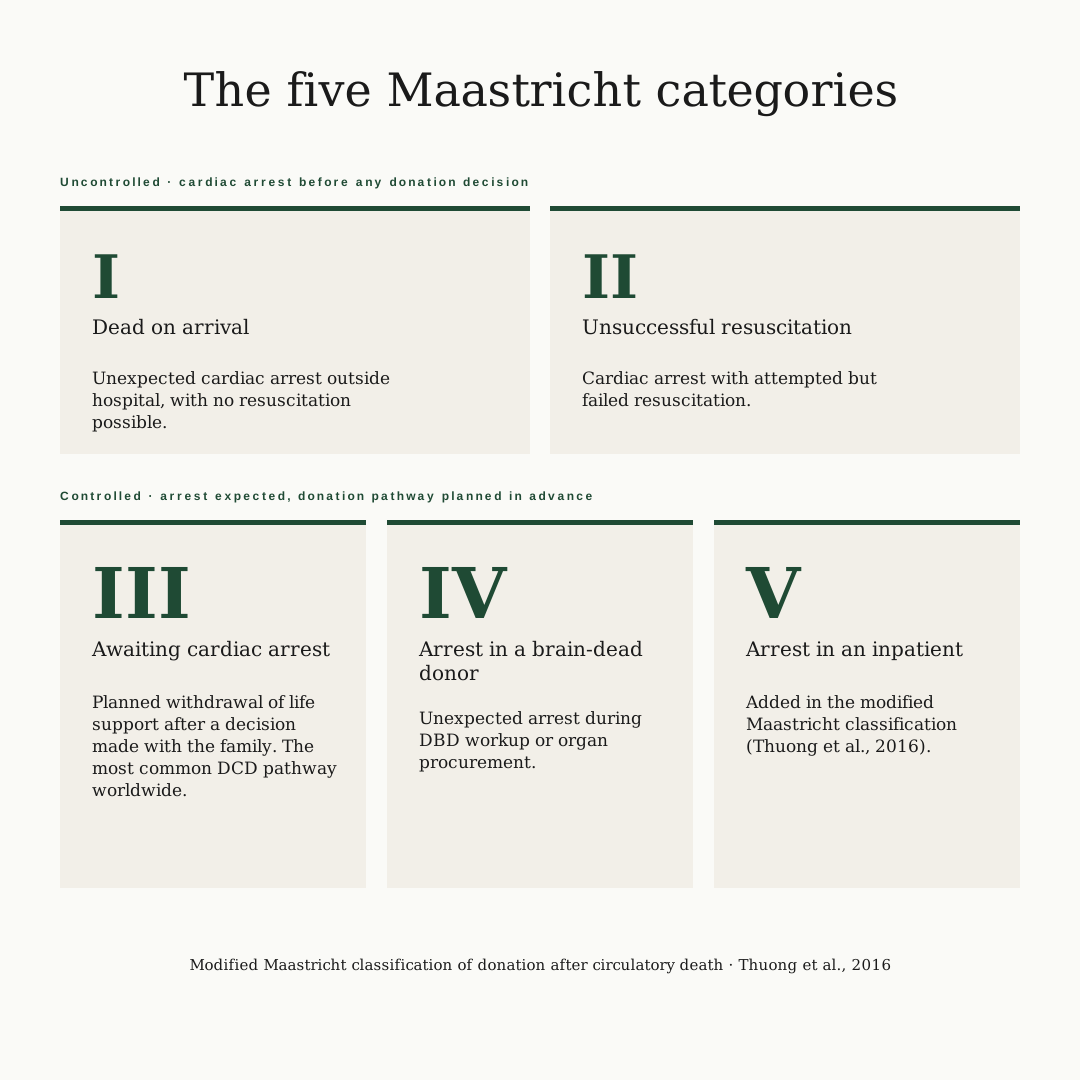
At the 1995 Maastricht workshop, Kootstra and colleagues proposed a four-category classification of DCD donors (then called non-heart-beating donors) [8]. The categories distinguish the circumstances in which the cardiac arrest occurred and, by extension, the warm ischemic time of the organs and the practicality of recovery (Figure 1):
- Category I: dead on arrival — patient declared dead in the emergency department after an out-of-hospital cardiac arrest, without sustained resuscitation;
- Category II: unsuccessful resuscitation — patient who suffered a witnessed cardiac arrest, received attempted cardiopulmonary resuscitation, and was declared dead after resuscitation failed (this can be subdivided into out-of-hospital and in-hospital subcategories);
- Category III: awaiting cardiac arrest — patient in whom a decision has been made, on grounds independent of organ donation, to withdraw life-sustaining treatment, and who is expected to develop circulatory arrest within a clinically usable time window;
- Category IV: cardiac arrest in a brain-dead donor — circulatory arrest occurring during work-up or staging of an already declared BD/DNC donor.
Categories I and II are termed "uncontrolled" because the cardiac arrest is unexpected and procurement teams must respond to events as they happen; categories III and IV are termed "controlled" because the time of circulatory arrest is broadly anticipated. This first-level controlled/uncontrolled distinction drives almost everything else about a DCD case: warm ischemic times in uncontrolled DCD are typically much longer and more variable, and uncontrolled DCD requires standing protocols, dedicated staffing, and, in many programs, in situ preservation techniques to be feasible.
In 2013, an international working group convened in Paris produced a consensus revision now usually called the modified Maastricht classification, published by Thuong and colleagues in 2016 [9]. The revision retained the original four categories and added a fifth — Maastricht V — to capture controlled DCD that follows medically assisted circulatory death (euthanasia or MAID), which had begun to occur in Belgium and the Netherlands and would later expand to Canada and Spain. The 2016 paper also formalized the controlled/uncontrolled dichotomy and clarified subdivision of categories I and II by location (out-of-hospital versus in-hospital).
4.3 Controlled DCD (Maastricht III)
Controlled DCD is the dominant DCD modality in most countries that perform substantial DCD activity. The donor pathway begins with a clinical decision, made independently of organ donation and on the basis of the patient's prognosis and wishes, to withdraw life-sustaining treatment (WLST). Once the family has been approached and consent for donation has been obtained (or first-person consent is on file), the patient is moved to an environment where withdrawal can occur with rapid access to the operating theater. The treating team withdraws ventilation and other supports; the patient enters an agonal phase that may last minutes to hours. In most protocols, organs are considered usable only if circulatory arrest occurs within a defined window after withdrawal (commonly 60 to 120 minutes for liver and pancreas, with more permissive thresholds for kidneys); donors who do not arrest within the agreed window are returned to ward-based end-of-life care.
After asystole, a "stand-off" or "no-touch" observation period is observed before death is declared. The 2021 international controlled donation after circulatory determination of death (cDCDD) collaborative statement led by Domínguez-Gil and colleagues defined the standard as the permanent cessation of circulation to the brain, declared after a 5-minute observation period without circulation [10]. The 5-minute interval is supported by an updated systematic review of autoresuscitation by Zorko and colleagues, which found no observational evidence of resumption of circulation more than 5 minutes after circulatory arrest in the controlled withdrawal setting, although case reports describe later autoresuscitation in resuscitated cardiac arrest [11]. National practice nevertheless varies. Wind and colleagues' survey of European DCD protocols documented marked heterogeneity in the duration of the no-touch interval, the categories used, the legal framework, and the methods of preservation [12]. The Canadian national framework, articulated in the 2006 Shemie consensus, has historically used 5 minutes [13], and the United Kingdom, Spain, the Netherlands, and Australia broadly align at 5 minutes; Italy and Germany have used longer intervals (20 and 5 minutes respectively, with Italy now moving toward 5; Germany’s figure is theoretical, since the country has no operating DCD program); and a small number of Canadian centers have used 2-minute protocols, an approach that the 2025 Organ Procurement and Transplantation Network / Health Resources and Services Administration (OPTN/HRSA) message to the U.S. transplant community advised reassessing in the light of recent autoresuscitation reports [17]. Death is then declared on circulatory criteria, after which procurement may begin. The interval between withdrawal and asystole and between asystole and aortic cannulation are usually termed the agonal warm ischemic time and the asystolic warm ischemic time, respectively.
4.4 Uncontrolled DCD (Maastricht I and II)
Uncontrolled DCD recovers organs from patients who have suffered a sudden, unexpected cardiac arrest. These programs are operationally demanding: a screening protocol must identify candidates rapidly, in-situ preservation must be initiated within tight time limits, and a legal and ethical framework must clearly distinguish ongoing resuscitation from preservation procedures. The 2023 International Liaison Committee on Resuscitation (ILCOR) scientific statement on organ donation after out-of-hospital cardiac arrest, led by Morrison and colleagues, set out the case for systematically integrating donation pathways into resuscitation systems, identified the absence of mandating legislation as the main impediment in most countries, and pointed to extracorporeal cardiopulmonary resuscitation (CPR) as a likely future driver of uncontrolled DCD volumes [14]. In practice, sustained uncontrolled DCD programs are operated principally by Spain and France, with smaller programs in Italy, Belgium, and the Netherlands.
4.5 Maastricht IV
Maastricht IV donors are a small group: patients in whom BD/DNC has already been declared but in whom unexpected cardiac arrest occurs before procurement. They are operationally treated as controlled DCD, but the underlying death is neurologic, which can simplify some of the ethical questions that surround other DCD pathways. A Chinese variant of this pathway, known there as Donation after Brain Death followed by Circulatory Death (DBCD or "category C"), is performed routinely as a way of accommodating cultural and legal positions in which donation is socially acceptable only after circulatory arrest, even when neurologic criteria for death have already been met; the model is discussed further in the worldwide section below.
4.6 Maastricht V — donation after MAID/euthanasia
Maastricht V donors are patients who have requested and received medical assistance in dying and who have separately consented to donation. The procedure is performed in jurisdictions where MAID is legal — Belgium, the Netherlands, Spain, Canada, and a growing number of others — and is operationally similar to controlled DCD in many respects: there is a planned circulatory arrest, an observation interval, and rapid procurement [15,16]. The differences are ethical and procedural rather than physiological. Belgium, the Netherlands, and Canada have together performed several hundred such donations, and published practical manuals describe consent processes, the separation of MAID and donation teams, and protocols for transferring patients from a primary site (sometimes the home) to the procurement environment [15,16]. Maastricht V cases remain a small minority of DCD activity but are growing.
The Worldwide Picture
5.1 Headline numbers
Global aggregate data are collected by the World Health Organization–Organización Nacional de Trasplantes (WHO–ONT) Global Observatory on Donation and Transplantation (GODT) and by the International Registry on Organ Donation and Transplantation (IRODaT) [18,19]. Population-adjusted donor rates for 2024 show a wide spread: Spain (53.9 per million population, pmp) leads, followed by the United States (49.7 pmp) and a small tier of countries above 30 pmp; an order of magnitude separates them from systems such as Germany and China, with much of the world below those values. These rates correspond to a record 173,727 solid organ transplants worldwide in 2024 — the highest number ever reported to the GODT, up from 172,397 in 2023 — of which the largest single component continues to be kidney transplantation. Donation after the circulatory determination of death accounted for 28% of all deceased donation activity globally in 2024, driving the year-on-year increase [19]. Figure 2 shows the rate (pmp) ranking for thirteen representative countries. A notable counter-trend within the 2024 figures is the United Kingdom, which recorded a 7% decline in deceased donors over its 2024–25 reporting year — the first such decline in the post-pandemic period and one that has prompted serious examination of programmatic factors despite a decade of growth.[21]
5.2 DCD share of deceased donation by country
The single most striking pattern in international donation activity is the very large between-country variation in the share of deceased donors that come from DCD rather than DBD (Figure 3).
Two patterns emerge from these data. First, the high-DCD systems — Spain, the Netherlands, the United Kingdom, Belgium, the United States, Australia, and Canada — share an intensive care unit (ICU) culture in which the withdrawal of life-sustaining treatment is a routine and well-protocolized event, an organized national or regional donor-coordination infrastructure, and (with the partial exception of Canada) a decade or more of sustained investment in dedicated retrieval teams and procurement coordination. Second, the low-DCD or zero-DCD systems are not low-DCD for a single reason: Germany lacks the enabling legal framework, Italy has been constrained by an unusually long mandatory observation interval, Japan and China have a weaker public acceptance of brain death (which paradoxically would push toward DCD but in fact has favored either living donation or hybrid pathways), Brazil and Chile face cultural barriers around the withdrawal of life-sustaining treatment, and India's low overall deceased-donation rate reflects an emerging deceased-donor system rather than an active choice between pathways. The picture across the very low end of the distribution is therefore not best understood as "countries that prefer DBD" but as "countries in which the conditions that make DCD feasible — legal, cultural, organizational, infrastructural — are not yet all in place."
5.3 What the figures show
Read across the two distributions in Figures 2 and 3, the country variation organizes into three structural patterns rather than three regional ones. The top tier of deceased-donor activity (≥30 pmp) is small — Spain, Portugal, the United States, Croatia, the Czech Republic, the United Kingdom, and a handful of others — and every country in it operates an established controlled-DCD pathway alongside DBD. Within that tier, the high-DCD systems — Spain (≈50%), the Netherlands, the United Kingdom (>50% of deceased donors in 2024–2025, the first year that share has been reached), Belgium, the United States (~43%), Australia, and Canada — share an ICU culture in which the withdrawal of life-sustaining treatment is a routine and well-protocolized event, a national authority with explicit DCD permission, and the operational machinery (coordinator coverage, transport, perfusion) to act on a controlled pathway within the available time window.[13,15,16,20,21,22,23] Below the top tier, the low-DCD share countries (Germany, Italy, Brazil, France, Korea, Japan) cluster around three distinct constraints rather than one: the absence of specific DCD legislation (Germany), historically longer mandatory circulatory-arrest observation intervals than the international 5-minute standard (Italy), or a recent legal opening that has not yet built activity (Korea, which only acquired an explicit legal framework for WLST in 2018).[12,24] The Spanish performance at the top of both distributions is widely attributed to the ONT model — dedicated transplant coordinators in every hospital, an integrated information system, in-hospital donation case-finding, and a national system for sharing protocols and outcomes — which converts willingness into actual donation more effectively than any other current configuration.[20]
5.4 Three outliers worth pulling out
China — the DBCD hybrid pathway. China has one of the largest absolute volumes of organ transplantation in the world (6,454 deceased donors in 2023). Because brain death has not been universally accepted by the public, Chinese practice evolved a hybrid pathway, formally introduced in 2011, called Donation after Brain Death followed by Circulatory Death (DBCD): donors first satisfy criteria for BD/DNC, mechanical support is then withdrawn, circulatory death is declared, and only then is procurement initiated. DBCD is the principal Chinese pathway and is also used in parts of Southeast Asia; it should be read as a distinct operational pattern rather than as either DBD or Western DCD.[18,28]
Japan — the terminology problem. Although BD/DNC has been legally recognized since 1997 and somewhat broadened in 2010, public uptake remains modest, and Japan's deceased donor rate is among the lowest in the high-income world; a high proportion of kidney and partial-liver transplants continue to come from living donors.[27] A 2024 systematic review by Kin and colleagues argued that Japanese DCD as practiced is often controlled in the international sense — terminal patients undergoing expected cardiac arrest in the ICU — even though it is reported as uncontrolled because Japanese practice typically does not include the rapid extubation and short agonal interval characteristic of Western controlled DCD.[27] The case illustrates how international comparisons of DCD activity can be confounded by terminology that does not travel well between health systems.
Chile — the WLST cultural barrier. Chile has one of the lowest effective deceased donor rates in Latin America despite a relatively well-developed transplant infrastructure. The introduction of DCD has been slowed by cultural barriers around the withdrawal of life-sustaining treatment, including the perception that withdrawal accelerates death and a clinical practice of de-escalating ventilatory support without extubation rather than performing terminal extubation.[25] Comparable obstacles have been described elsewhere in the region. Chile illustrates the point that a controlled-DCD pathway depends not only on legal and operational scaffolding but on whether the upstream WLST conversation is itself a routine and well-protocolized event in the receiving ICU.
5.5 Global ethical framework
Finally, the worldwide donation system is governed by an evolving ethical framework that complements the dead donor rule. The 2008 Declaration of Istanbul, updated in 2018, provides definitions of organ trafficking and transplant tourism and articulates principles intended to combat them; over 135 national and international medical societies and governmental bodies have endorsed its principles, and it has substantially reshaped national legislation in much of the world [29].
Synthesis and Outlook
The picture today is one of two pathways that have become more, rather than less, distinct. DBD remains the historical core of deceased donation: a comparatively well-controlled physiology, an internationally harmonized determination process now anchored by the 2020 World Brain Death Project and the 2023 AAN/AAP/CNS/SCCM consensus guideline, and the broadest organ yield. DCD has moved from a margin to a major share of activity in several leading systems — exceeding 40% of deceased donors in Spain, the Netherlands, the United Kingdom, and the United States — while remaining negligible or absent in others, with the country-level pattern reflecting the convergence (or absence) of legal, cultural, organizational, and infrastructural conditions rather than a single dominant cause. Within DCD, the modified Maastricht classification provides a common language to describe a heterogeneous donor population, and country-specific variants such as the Chinese DBCD model serve populations for which a purely DBD pathway is not socially or legally available.
For the clinician, three implications follow. First, the modern DBD–DCD distinction is best understood as a continuum of donor circumstance rather than as a binary; second, country-level variation reflects organizational and cultural choices at least as much as raw donor availability, and the Spanish experience is the strongest empirical demonstration that infrastructure converts willingness into donation, while the Chinese DBCD pathway, the Indian, Korean, and Latin American emerging programs, and the persistent Japanese reliance on living donation each demonstrate, in their own way, that no single deceased-donation template fits all health systems; and third, the ethical work required of the field is not finished — MAID-associated donation and the legal status of BD/DNC in particular jurisdictions continue to require active and transparent engagement with patients, families, and the public.
References
- Truog RD, Miller FG. The dead donor rule and organ transplantation. N Engl J Med. 2008;359(7):674–675. doi.org/10.1056/NEJMp0804474
- Ad Hoc Committee of the Harvard Medical School to Examine the Definition of Brain Death. A definition of irreversible coma. JAMA. 1968;205(6):337–340. doi.org/10.1001/jama.1968.03140320031009
- National Conference of Commissioners on Uniform State Laws. Uniform Determination of Death Act. 1981. uniformlaws.org
- Greer DM, Shemie SD, Lewis A, Torrance S, Varelas P, Goldenberg FD, et al. Determination of brain death/death by neurologic criteria: the World Brain Death Project. JAMA. 2020;324(11):1078–1097. doi.org/10.1001/jama.2020.11586
- Greer DM, Kirschen MP, Lewis A, Gronseth GS, Rae-Grant A, Ashwal S, et al. Pediatric and adult brain death/death by neurologic criteria consensus practice guideline. Neurology. 2023;101(24):1112–1132. doi.org/10.1212/WNL.0000000000207740
- Wijdicks EFM, Varelas PN, Gronseth GS, Greer DM. Evidence-based guideline update: determining brain death in adults — report of the Quality Standards Subcommittee of the American Academy of Neurology. Neurology. 2010;74(23):1911–1918. doi.org/10.1212/WNL.0b013e3181e242a8
- DeVita MA, Snyder JV. Development of the University of Pittsburgh Medical Center policy for the care of terminally ill patients who may become organ donors after death following the removal of life support. Kennedy Inst Ethics J. 1993;3(2):131–143. pubmed.ncbi.nlm.nih.gov/10125440
- Kootstra G, Daemen JHC, Oomen APA. Categories of non-heart-beating donors. Transplant Proc. 1995;27(5):2893–2894. pubmed.ncbi.nlm.nih.gov/7482956
- Thuong M, Ruiz A, Evrard P, Kuiper M, Boffa C, Akhtar MZ, et al. New classification of donation after circulatory death donors definitions and terminology. Transpl Int. 2016;29(7):749–759. doi.org/10.1111/tri.12776
- Domínguez-Gil B, Ascher N, Capron AM, et al. Expanding controlled donation after the circulatory determination of death: statement from an international collaborative. Intensive Care Med. 2021;47(3):265–281. doi.org/10.1007/s00134-020-06341-7
- Zorko DJ, Shemie J, Hornby L, et al. Autoresuscitation after circulatory arrest: an updated systematic review. Can J Anaesth. 2023;70(4):699–712. doi.org/10.1007/s12630-023-02411-8
- Wind J, Faut M, van Smaalen TC, van Heurn ELW. Variability in protocols on donation after circulatory death in Europe. Crit Care. 2013;17(5):R217. doi.org/10.1186/cc13034
- Shemie SD, Baker AJ, Knoll G, et al. National recommendations for donation after cardiocirculatory death in Canada. CMAJ. 2006;175(8 Suppl):S1–S24. doi.org/10.1503/cmaj.060895
- Morrison LJ, Sandroni C, Grunau B, et al. Organ donation after out-of-hospital cardiac arrest: a scientific statement from the International Liaison Committee on Resuscitation. Circulation. 2023;148(10):e120–e146. doi.org/10.1161/CIR.0000000000001125
- Bollen J, de Jongh W, Hagenaars J, van Dijk G, ten Hoopen R, Ysebaert D, Ijzermans J, van Heurn E, van Mook W. Organ donation after euthanasia: a Dutch practical manual. Am J Transplant. 2016;16(7):1967–1972. doi.org/10.1111/ajt.13746
- Mulder J, Sonneveld H, Van Raemdonck D, Downar J, Wiebe K, Domínguez-Gil B, Healey A, Desschans B, Neyrinck A, Pérez Blanco A, van Dusseldorp I, Olthuis G. Practice and challenges for organ donation after medical assistance in dying: a scoping review including the results of the first international roundtable in 2021. Am J Transplant. 2022;22(12):2759–2780. doi.org/10.1111/ajt.17198
- Organ Procurement and Transplantation Network / Health Resources and Services Administration. Ensuring safety and reliability in DCD protocols — a message to the OPTN community. OPTN/HRSA, 2025. optn.transplant.hrsa.gov
- International Registry on Organ Donation and Transplantation (IRODaT). 2024 newsletter and worldwide data. December 2025. irodat.org
- Martin F, Carmona M, Mahillo B, Alvarez M, Luengo A, Chatzixiros E, López-Fraga M, Domínguez-Gil B. Organ donation and transplantation worldwide: the Global Observatory on Donation and Transplantation 2024 report. Transplantation. 2026;110(3):e655–e669. journals.lww.com/transplantjournal
- Spanish National Transplant Organization (ONT). Memoria de actividad: donación y trasplante de órganos 2024. Madrid: Ministerio de Sanidad; 2025. ont.es
- NHS Blood and Transplant. Organ and Tissue Donation and Transplantation Activity Report 2024/2025. NHSBT, 2025. odt.nhs.uk/annual-activity-report
- Israni AK, Zaun DA, Martinez A, Schaffhausen CR, Lozano C, McKinney WT, Miller JM, Snyder JJ. OPTN/SRTR 2023 Annual Data Report: deceased organ donation. Am J Transplant. 2025;25(2 Suppl):S1–S130. doi.org/10.1016/j.ajt.2025.01.026
- Health Resources and Services Administration (HRSA). Organ transplants exceeded 48,000 in 2024 (7,280 DCD donors, 9,706 DBD donors). 2025. srtr.transplant.hrsa.gov
- Park H, Jung E-S, Oh J-S, Lee Y-M, Lee J-M. Organ donation after controlled circulatory death (Maastricht classification III) following the withdrawal of life-sustaining treatment in Korea: a suggested guideline. Korean J Transplant. 2021;35(2):71–76. doi.org/10.4285/kjt.21.0004
- Pérez Castro P, Salas SP. Ethical issues of organ donation after circulatory death: considerations for a successful implementation in Chile. Developing World Bioethics. 2022. doi.org/10.1111/dewb.12338
- Seth AK, Mohanka R, Navin S, Gokhale AGK, Sharma A, Kumar A, Ramachandran B, Balakrishnan KR, Mirza D, Mehta D, Zirpe KG, Dhital K, Sahay M, Simha S, Sundaram R, Pandit R, Mani RK, Gursahani R, Gupta S, Kute VB, Shroff S. Organ donation after circulatory determination of death in India: a joint position paper. Indian J Crit Care Med. 2022;26(4):421–438. doi.org/10.5005/jp-journals-10071-24160
- Kin T, Noguchi H, Kawaguchi A. Is donation after circulatory determination of death in Japan uncontrolled or controlled? OBM Transplantation. 2024;8(2). doi.org/10.21926/obm.transplant.2402216
- Sun Q, Zhou H, Cao R, Lin M, Hua X, Hong L, Huang Z, Na N, Cai R, Wang G, Meng F, Sun Q. Donation after brain death followed by circulatory death, a novel donation pattern, confers comparable renal allograft outcomes with donation after brain death. BMC Nephrol. 2018;19(1):219. doi.org/10.1186/s12882-018-1024-0
- Declaration of Istanbul Custodian Group. The Declaration of Istanbul on Organ Trafficking and Transplant Tourism (2018 edition). declarationofistanbul.org